From Gold Rush boomtown to modern Bay City
As your bus climbs hills and skirts the shoreline, you’ll encounter layers of history—from maritime traders and immigrants to artists, tech pioneers, and environmental stewards.
Table of Contents
From Gold Rush to Bay City

San Francisco’s story is one of astonishing transformation. Before 1849 the area was a modest Mexican settlement and an outpost for maritime trade; then the discovery of gold catalyzed a global rush of people, goods, and capital. Tents and hastily assembled shacks mushroomed into whole neighborhoods almost overnight as prospectors, merchants, cooks and entrepreneurs flooded the city. That sudden boom left an indelible imprint: a fearless streak of reinvention, a fascination with the horizon, and an appetite for risk that still shapes the city’s character.
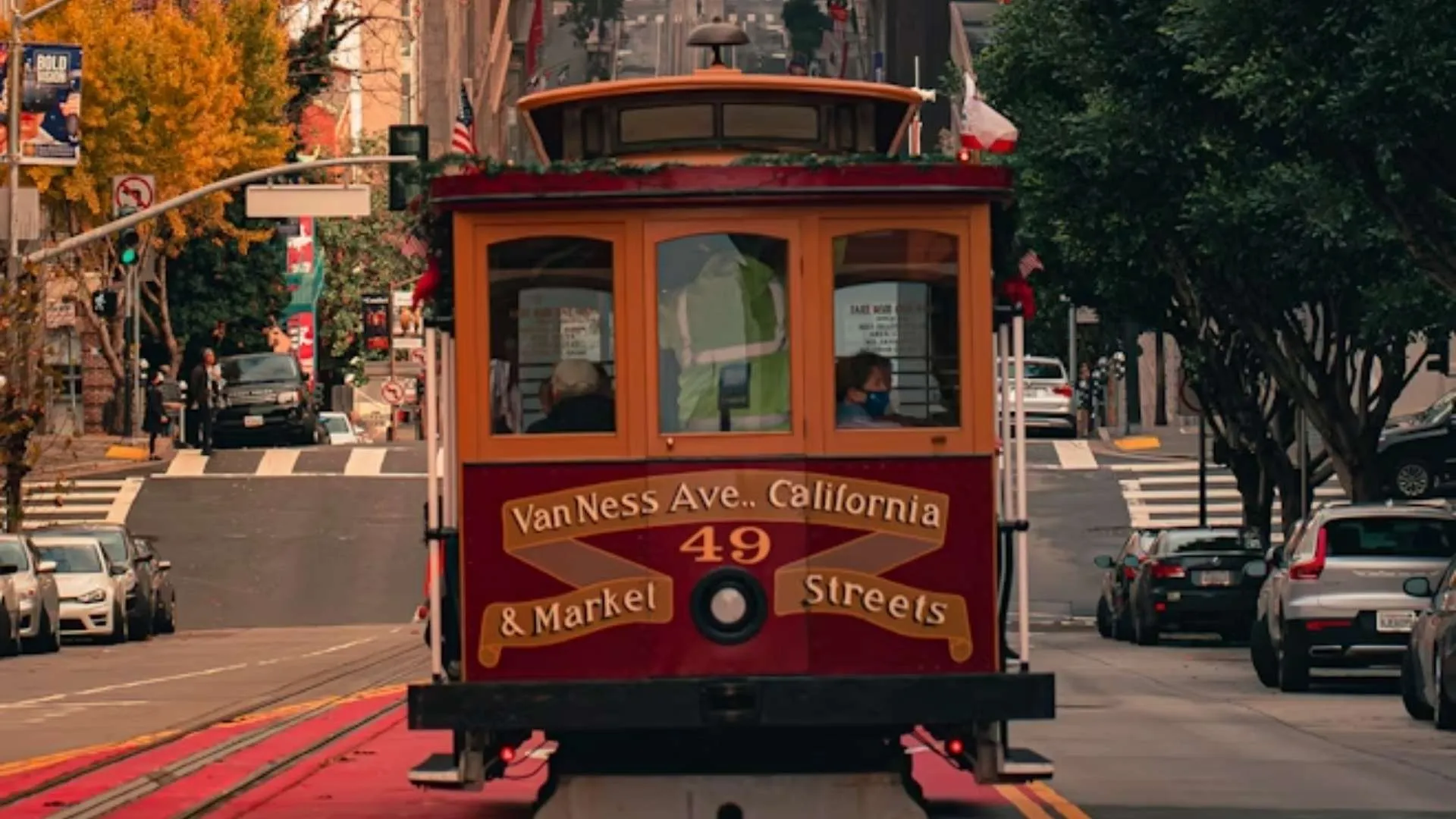
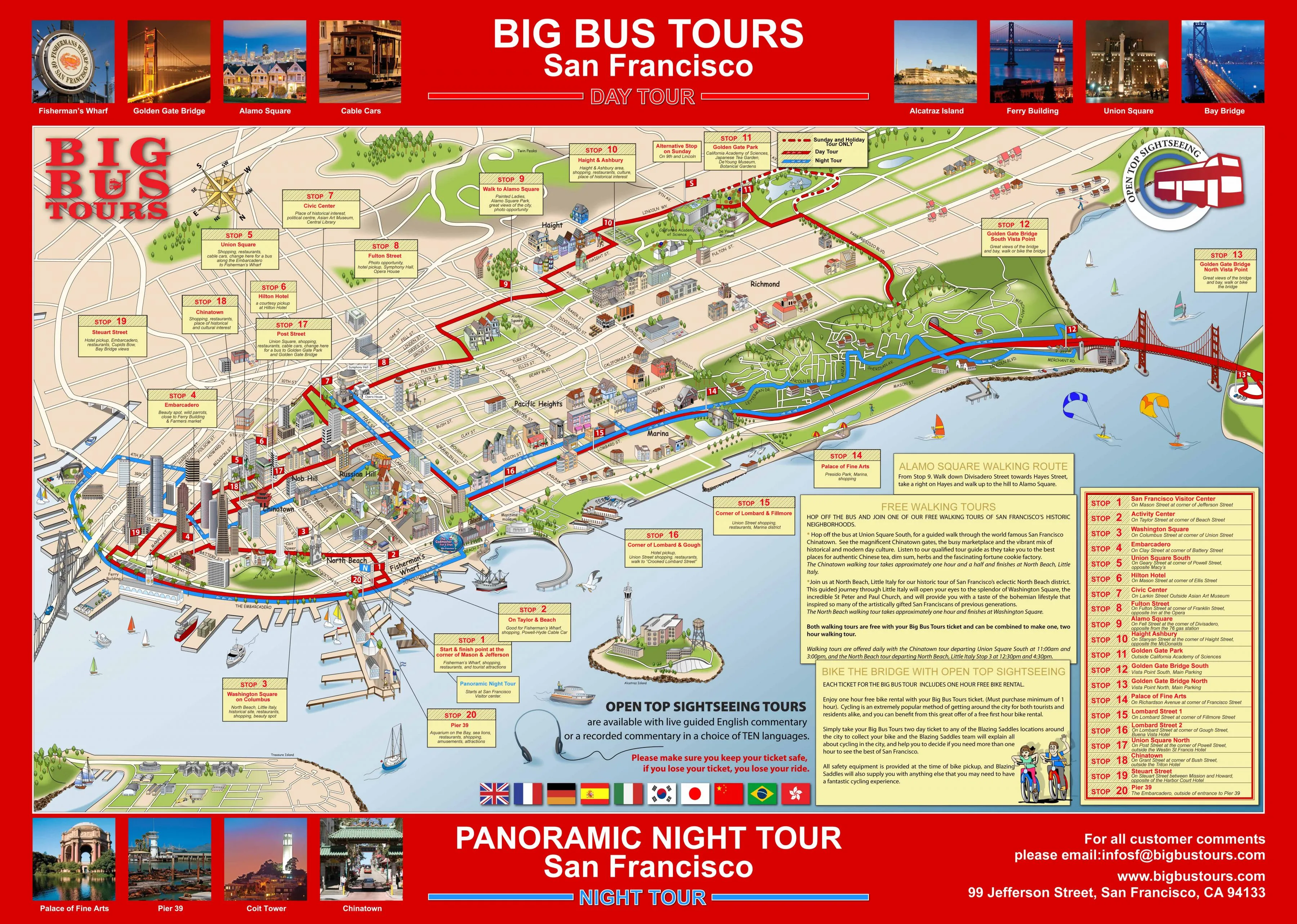
The next chapters were equally dramatic. In the late nineteenth century the city filled out with ornate Victorians, cable cars, and a bustling port; the 1906 earthquake and fire erased swathes of the town but also produced an extraordinary rebuild, a civic resolve that echoed across neighborhoods. Over the twentieth and twenty‑first centuries San Francisco balanced waves of immigration, a thriving arts scene, defense and shipping industries, and later the rise of technology. Riding the hop‑on hop‑off route, you’ll pass sites that bear traces of each era—wharves, historic mansions, transformed industrial sites—so the city reads like a layered palimpsest where past and present meet on the pavement.
The waterfront: piers and maritime life
The Embarcadero and Fisherman’s Wharf were once the beating heart of San Francisco’s maritime economy: piers stacked with cargo, canneries humming, and sailors from across the Pacific weaving a dense network of commerce and culture. Over time those working docks adapted—some became tourist piers, others museums or public spaces—yet much of the waterfront retains its sea‑facing energy. Walking the piers you’ll sense the maritime stories: immigrant crews, ferry commuters, fishermen, and the ever‑present tugboats moving ships in and out of the Bay.
The Ferry Building, rebuilt and re‑imagined as a market and meeting point, crystallizes that evolution: a working transit hub that now pairs artisan food stalls with daily commuters. Piers alternate between quiet restoration projects and lively public events, and small details—rusted cleats, old signage, warehouse facades—tell the story of an economy once defined by wooden crates and nets but now sustained by a mix of culture, tourism, and conservation.
Victorians, neighborhoods & daily trade

San Francisco’s neighborhoods read like chapters in a living history book. The painted Victorians of Alamo Square and the tight, elegant rows in Pacific Heights speak of an era of ambitious homebuilding; the Mission District’s murals chronicle social and political movements, immigration and artistic resurgence. Each neighborhood evolved with a distinct character—markets, bodegas, family bakeries and corner cafés keep daily life grounded even as tourists pass through.
On the bus you’ll glimpse these contrasting scenes: Victorian facades giving way to modern apartment blocks, colorful storefronts signposting cultural traditions, and small family businesses that tell migration stories of their own. Hop off in a neighborhood and you’ll find markets and independent shops that anchor local life in ways big institutions can’t replicate.
Across the Embarcadero to the Presidio
The Presidio and the Palace of Fine Arts recall the city’s role in global expositions and military history. Once an army post, the Presidio is now a blended landscape of restored forts, museum spaces, and coastal trails. The Palace of Fine Arts, built for the 1915 Panama‑Pacific International Exposition, is a romantic fragment of classical architecture that survived the city’s transformations and now frames quiet ponds and public gardens.
From the bus you can step off to explore trails, historic batteries, and museum exhibits that link military history to conservation practice. The Presidio’s conversion into parkland and cultural space is one of many examples where San Francisco has reused strategic sites for public benefit, preserving views and access to the water while inviting people to reconnect with the shoreline’s natural and historical layers.
Bridges, shipping lanes & engineering feats

The Golden Gate Bridge is more than a photograph; it is the result of audacious engineering, civic will, and aesthetic ambition. Opened in 1937, its International Orange towers and sweeping cables were built to withstand wind, fog, and seismic risk. From viewpoints along Crissy Field and the Marin headlands the bridge reads as both technological triumph and a poetic backdrop to the Bay.
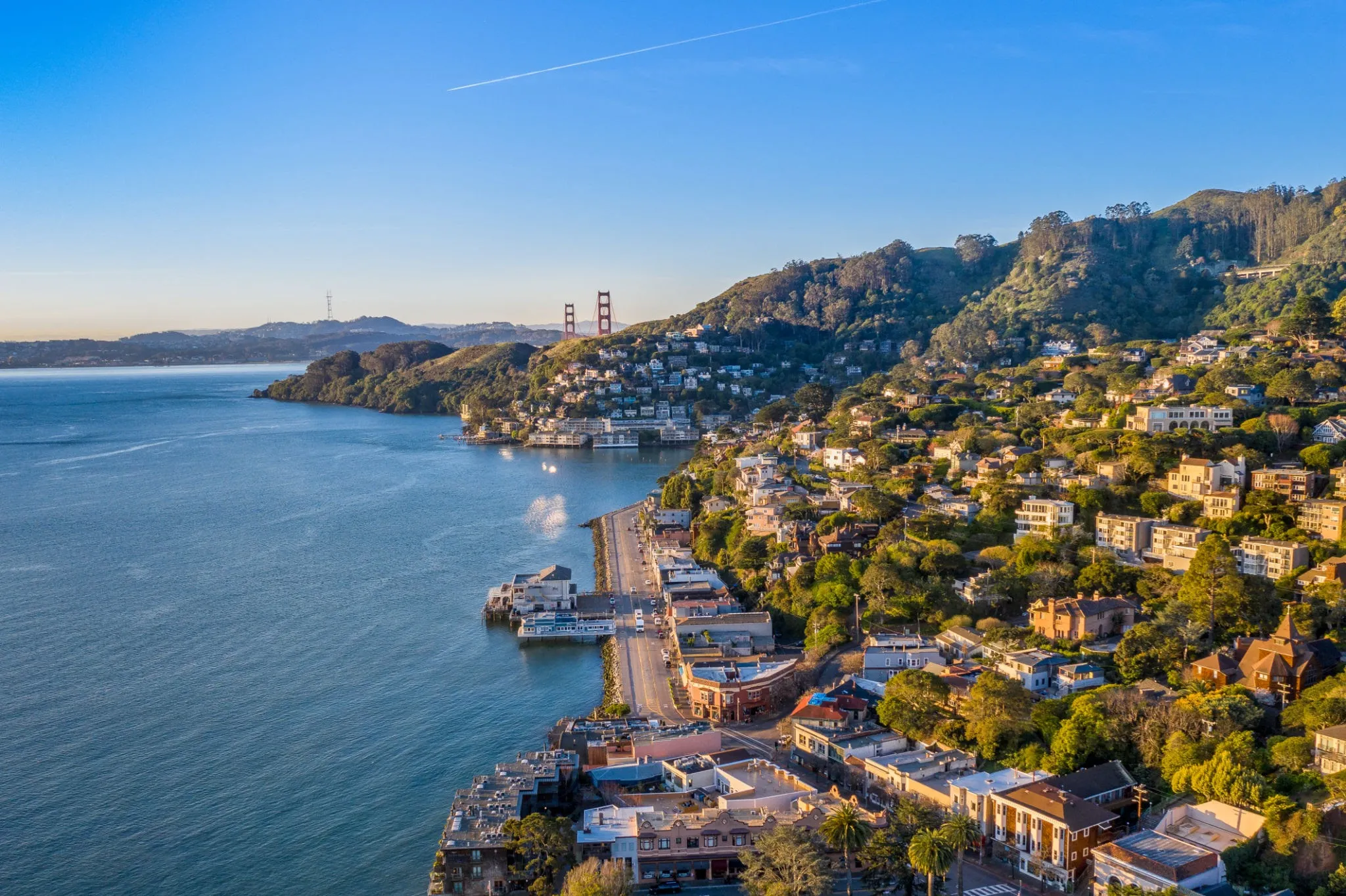
Beyond the Golden Gate the Bay’s shipping lanes and ferry crossings remind you that San Francisco has long been an interface between land and sea. Ferries to Sausalito and Alameda, container traffic further out in the Bay, and active commuter routes keep the water alive with movement—each crossing a reminder of how the city’s fortunes are tied to maritime connection.
Modern San Francisco: culture, tech, and neighborhoods

In recent decades San Francisco has become a global center for technology, design, and cultural production, and that rapid change has reshaped neighborhoods, economics, and daily life. New industries brought global talent and capital alongside renewed debates about housing, equity, and public space; cultural institutions persisted, adapting to a changing city while preserving local memory.
Traveling the route you’ll see both new glass towers and beloved local theatres, galleries and music venues—reminders that the city’s identity is neither static nor single‑minded but an ongoing negotiation between innovation and rooted communities.
Immigration, industry & environmental change
Waves of immigration—Chinese laborers in the nineteenth century, European and Latin American arrivals later, and a steady flow of global migrants—have shaped San Francisco’s cuisine, festivals, language and business life. The city’s neighborhoods preserve these cultural threads in food markets, temples, churches, and community centers.
At the same time, environmental concerns and resilience planning have transformed how the city approaches its shoreline and infrastructure. Restoration projects, shoreline buffers, and conservation of wetlands alongside ambitious transit and housing plans show a city attempting to balance ecological stewardship with urban vitality.
Crowds, safety & accessibility

San Francisco welcomes visitors year‑round and that means using common sense: keep belongings secure, follow staff directions at busy piers, and be mindful of steep streets and changing weather. Official stops are managed to make boarding safe, and staff can help with route information or accessibility questions.
Accessibility varies by vehicle and stop—many operators provide low‑floor vehicles and wheelchair spaces, but older sidewalks and steep ramps can present challenges. If you require step‑free access, contact the operator ahead of time for the smoothest experience and consider planning a route with fewer steep transitions.
Festivals, culture & city rituals
San Francisco’s calendar is full of cultural life: Pride, Fleet Week, film festivals, street fairs, and neighborhood block parties. These events can make a familiar route feel new—street art, pop‑up stages, and food vendors create memorable, sensory moments that reflect the city’s creative energy and community traditions.
Even on ordinary days, local rituals—commuters meeting for coffee at the Ferry Building, dog‑walkers at Crissy Field, farmers unloading produce—give you glimpses of everyday life that feel rooted and immediate. Hopping off for an hour or two is often enough to step into those rhythms.
Tickets, passes & smart planning
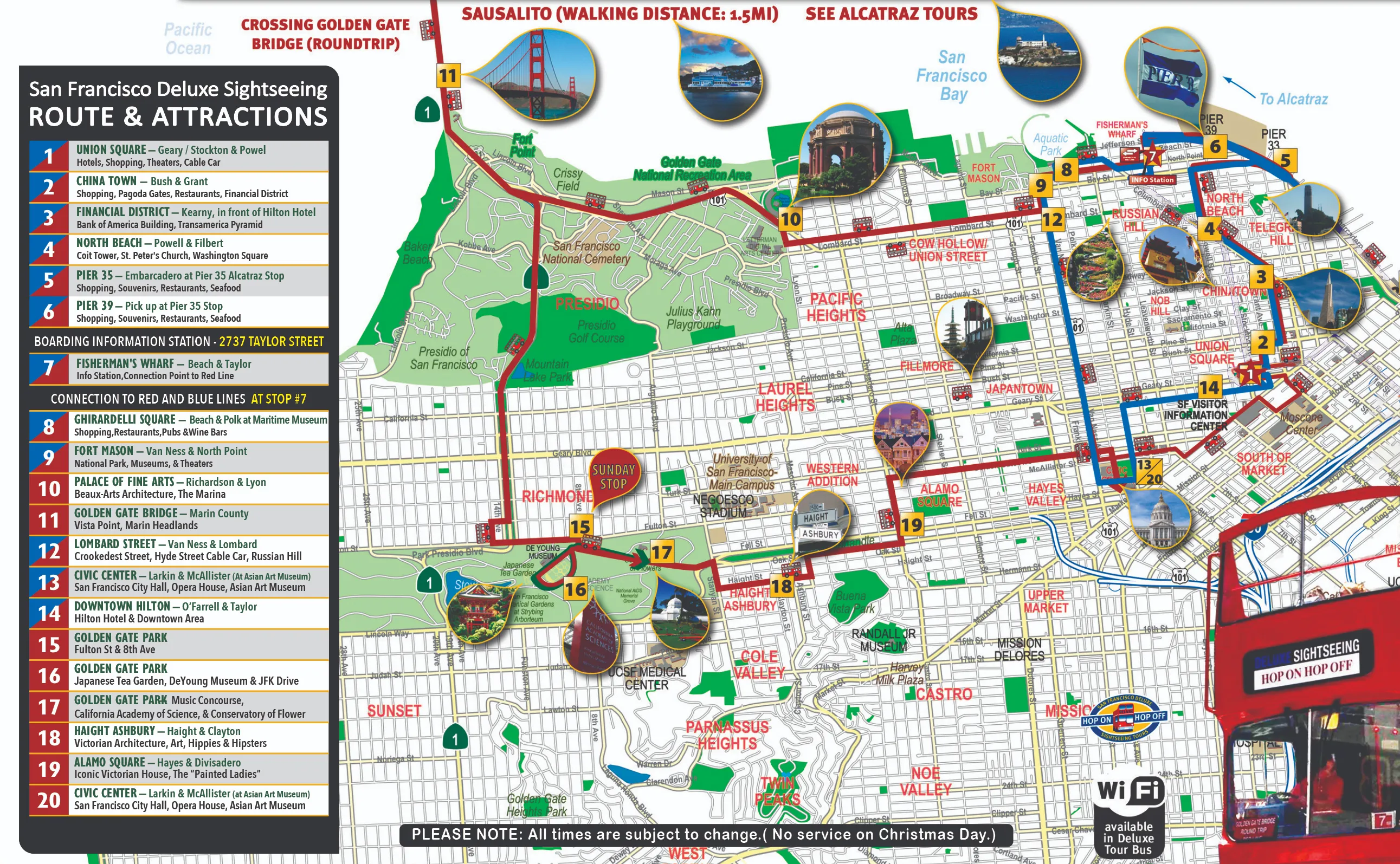
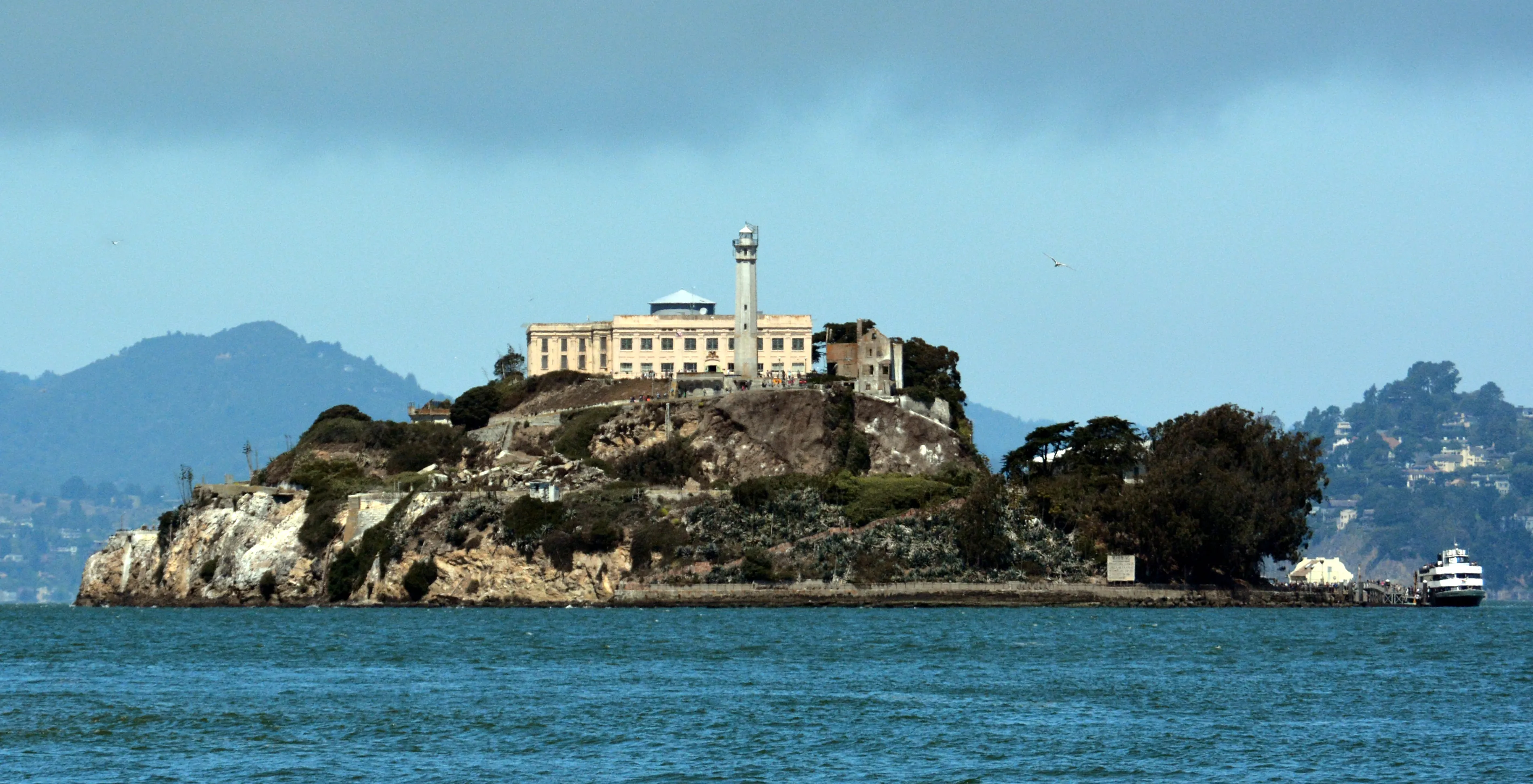
Smart planning begins by choosing the ticket that matches your goals: a single loop if you want a quick orientation, a 24‑hour pass for a full‑day exploration, or a multi‑day pass to savor neighborhoods slowly. Consider combos that include ferry crossings if you want an Alcatraz perspective, or guided walks for deeper neighborhood context.
Think about what you value most—views, food, museums—and plan your hop‑offs accordingly. If you have timed bookings (Alcatraz ferries, museum entries), allow buffer time for traffic and ferry schedules so you don’t miss reserved slots.
Preserving heritage in a growing city

San Francisco’s approach to preservation is pragmatic and often community‑led: historic districts are protected, landmark buildings carefully restored, and former industrial zones repurposed as parks and cultural spaces. Neighborhood groups and preservationists play an active role in deciding what to keep and how to adapt it for contemporary life.
As a visitor, supporting official attractions and respecting neighborhood life helps sustain these efforts. Using hop‑on hop‑off services responsibly spreads visitation and reduces pressure on a single site, helping preserve the quieter corners that make the city special.
Side trips & Bay viewpoints
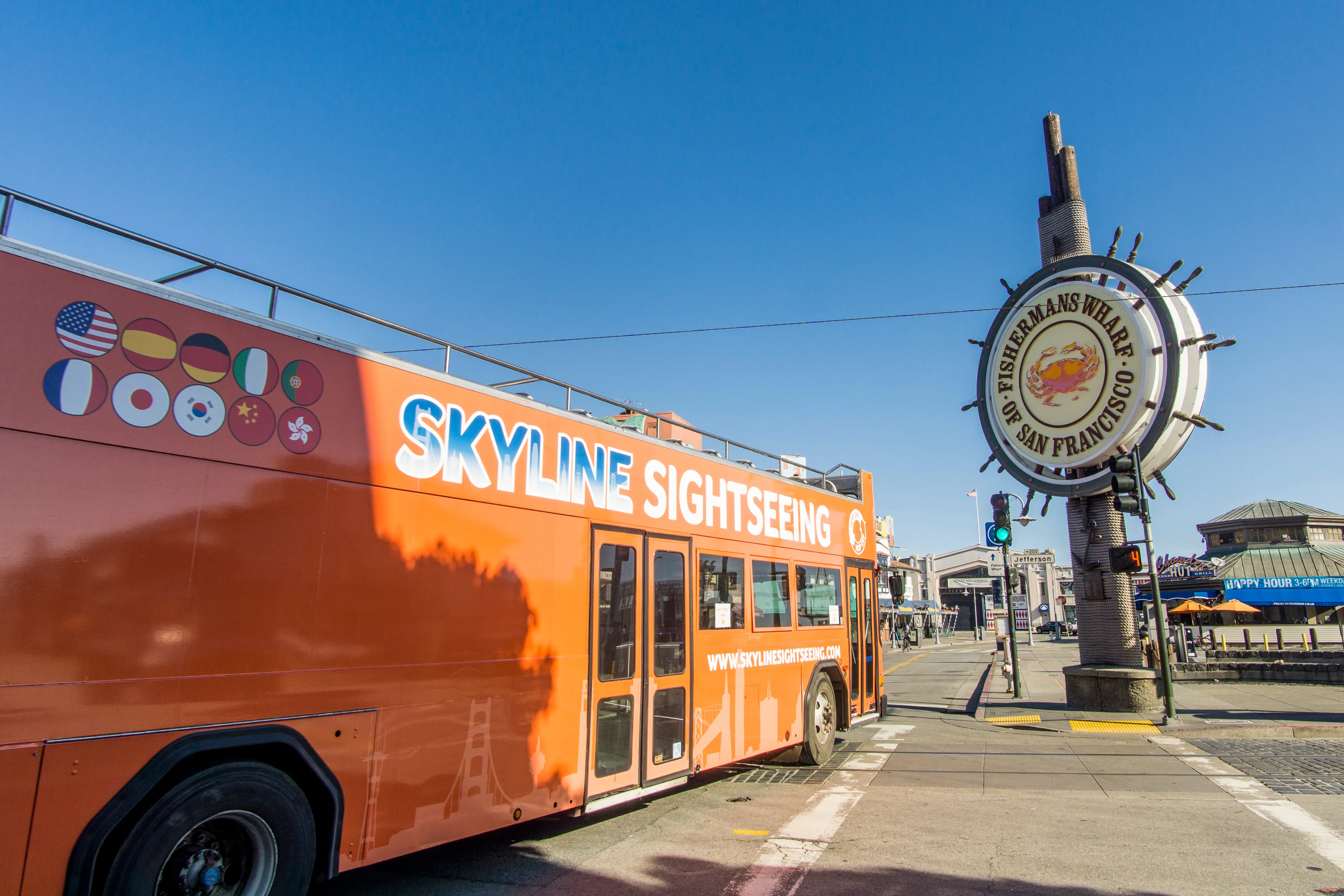
The hop‑on hop‑off service is a great springboard for side trips: short ferries to Sausalito offer coastal charm and art galleries, while Angel Island provides hiking trails with panoramic Bay views. Each short crossing gives a different perspective on the city and its maritime setting.
Sunset ferry crossings, picnic spots near Crissy Field, and lookout points in the Marin headlands all reward a little extra time off the bus. If your pass includes ferry combos, plan a late‑afternoon crossing for dramatic skyline photos as lights come on across the Bay.
Why a bus ride tells San Francisco’s story

A hop‑on hop‑off route stitches together the city’s contrasts—industrial wharves, manicured parks, immigrant neighborhoods, and modern tech campuses—so a single day can feel like a crash course in what makes San Francisco unique. The bus is both convenient transport and a moving observatory that lets you see how different eras and communities overlap in a single urban fabric.
By the end of your loop you’ll have a collage of moments—the barking of sea lions, the bright span of the Golden Gate, colorful murals, and cobbled alleyways—that collectively tell a richer story than any single landmark. Treat the route as an invitation: hop off where curiosity catches you, and let the city unfold at your pace.
Table of Contents
From Gold Rush to Bay City
San Francisco’s story is one of astonishing transformation. Before 1849 the area was a modest Mexican settlement and an outpost for maritime trade; then the discovery of gold catalyzed a global rush of people, goods, and capital. Tents and hastily assembled shacks mushroomed into whole neighborhoods almost overnight as prospectors, merchants, cooks and entrepreneurs flooded the city. That sudden boom left an indelible imprint: a fearless streak of reinvention, a fascination with the horizon, and an appetite for risk that still shapes the city’s character.
The next chapters were equally dramatic. In the late nineteenth century the city filled out with ornate Victorians, cable cars, and a bustling port; the 1906 earthquake and fire erased swathes of the town but also produced an extraordinary rebuild, a civic resolve that echoed across neighborhoods. Over the twentieth and twenty‑first centuries San Francisco balanced waves of immigration, a thriving arts scene, defense and shipping industries, and later the rise of technology. Riding the hop‑on hop‑off route, you’ll pass sites that bear traces of each era—wharves, historic mansions, transformed industrial sites—so the city reads like a layered palimpsest where past and present meet on the pavement.
The waterfront: piers and maritime life
The Embarcadero and Fisherman’s Wharf were once the beating heart of San Francisco’s maritime economy: piers stacked with cargo, canneries humming, and sailors from across the Pacific weaving a dense network of commerce and culture. Over time those working docks adapted—some became tourist piers, others museums or public spaces—yet much of the waterfront retains its sea‑facing energy. Walking the piers you’ll sense the maritime stories: immigrant crews, ferry commuters, fishermen, and the ever‑present tugboats moving ships in and out of the Bay.
The Ferry Building, rebuilt and re‑imagined as a market and meeting point, crystallizes that evolution: a working transit hub that now pairs artisan food stalls with daily commuters. Piers alternate between quiet restoration projects and lively public events, and small details—rusted cleats, old signage, warehouse facades—tell the story of an economy once defined by wooden crates and nets but now sustained by a mix of culture, tourism, and conservation.
Victorians, neighborhoods & daily trade
San Francisco’s neighborhoods read like chapters in a living history book. The painted Victorians of Alamo Square and the tight, elegant rows in Pacific Heights speak of an era of ambitious homebuilding; the Mission District’s murals chronicle social and political movements, immigration and artistic resurgence. Each neighborhood evolved with a distinct character—markets, bodegas, family bakeries and corner cafés keep daily life grounded even as tourists pass through.
On the bus you’ll glimpse these contrasting scenes: Victorian facades giving way to modern apartment blocks, colorful storefronts signposting cultural traditions, and small family businesses that tell migration stories of their own. Hop off in a neighborhood and you’ll find markets and independent shops that anchor local life in ways big institutions can’t replicate.
Across the Embarcadero to the Presidio
The Presidio and the Palace of Fine Arts recall the city’s role in global expositions and military history. Once an army post, the Presidio is now a blended landscape of restored forts, museum spaces, and coastal trails. The Palace of Fine Arts, built for the 1915 Panama‑Pacific International Exposition, is a romantic fragment of classical architecture that survived the city’s transformations and now frames quiet ponds and public gardens.
From the bus you can step off to explore trails, historic batteries, and museum exhibits that link military history to conservation practice. The Presidio’s conversion into parkland and cultural space is one of many examples where San Francisco has reused strategic sites for public benefit, preserving views and access to the water while inviting people to reconnect with the shoreline’s natural and historical layers.
Bridges, shipping lanes & engineering feats
The Golden Gate Bridge is more than a photograph; it is the result of audacious engineering, civic will, and aesthetic ambition. Opened in 1937, its International Orange towers and sweeping cables were built to withstand wind, fog, and seismic risk. From viewpoints along Crissy Field and the Marin headlands the bridge reads as both technological triumph and a poetic backdrop to the Bay.
Beyond the Golden Gate the Bay’s shipping lanes and ferry crossings remind you that San Francisco has long been an interface between land and sea. Ferries to Sausalito and Alameda, container traffic further out in the Bay, and active commuter routes keep the water alive with movement—each crossing a reminder of how the city’s fortunes are tied to maritime connection.
Modern San Francisco: culture, tech, and neighborhoods
In recent decades San Francisco has become a global center for technology, design, and cultural production, and that rapid change has reshaped neighborhoods, economics, and daily life. New industries brought global talent and capital alongside renewed debates about housing, equity, and public space; cultural institutions persisted, adapting to a changing city while preserving local memory.
Traveling the route you’ll see both new glass towers and beloved local theatres, galleries and music venues—reminders that the city’s identity is neither static nor single‑minded but an ongoing negotiation between innovation and rooted communities.
Immigration, industry & environmental change
Waves of immigration—Chinese laborers in the nineteenth century, European and Latin American arrivals later, and a steady flow of global migrants—have shaped San Francisco’s cuisine, festivals, language and business life. The city’s neighborhoods preserve these cultural threads in food markets, temples, churches, and community centers.
At the same time, environmental concerns and resilience planning have transformed how the city approaches its shoreline and infrastructure. Restoration projects, shoreline buffers, and conservation of wetlands alongside ambitious transit and housing plans show a city attempting to balance ecological stewardship with urban vitality.
Crowds, safety & accessibility
San Francisco welcomes visitors year‑round and that means using common sense: keep belongings secure, follow staff directions at busy piers, and be mindful of steep streets and changing weather. Official stops are managed to make boarding safe, and staff can help with route information or accessibility questions.
Accessibility varies by vehicle and stop—many operators provide low‑floor vehicles and wheelchair spaces, but older sidewalks and steep ramps can present challenges. If you require step‑free access, contact the operator ahead of time for the smoothest experience and consider planning a route with fewer steep transitions.
Festivals, culture & city rituals
San Francisco’s calendar is full of cultural life: Pride, Fleet Week, film festivals, street fairs, and neighborhood block parties. These events can make a familiar route feel new—street art, pop‑up stages, and food vendors create memorable, sensory moments that reflect the city’s creative energy and community traditions.
Even on ordinary days, local rituals—commuters meeting for coffee at the Ferry Building, dog‑walkers at Crissy Field, farmers unloading produce—give you glimpses of everyday life that feel rooted and immediate. Hopping off for an hour or two is often enough to step into those rhythms.
Tickets, passes & smart planning
Smart planning begins by choosing the ticket that matches your goals: a single loop if you want a quick orientation, a 24‑hour pass for a full‑day exploration, or a multi‑day pass to savor neighborhoods slowly. Consider combos that include ferry crossings if you want an Alcatraz perspective, or guided walks for deeper neighborhood context.
Think about what you value most—views, food, museums—and plan your hop‑offs accordingly. If you have timed bookings (Alcatraz ferries, museum entries), allow buffer time for traffic and ferry schedules so you don’t miss reserved slots.
Preserving heritage in a growing city
San Francisco’s approach to preservation is pragmatic and often community‑led: historic districts are protected, landmark buildings carefully restored, and former industrial zones repurposed as parks and cultural spaces. Neighborhood groups and preservationists play an active role in deciding what to keep and how to adapt it for contemporary life.
As a visitor, supporting official attractions and respecting neighborhood life helps sustain these efforts. Using hop‑on hop‑off services responsibly spreads visitation and reduces pressure on a single site, helping preserve the quieter corners that make the city special.
Side trips & Bay viewpoints
The hop‑on hop‑off service is a great springboard for side trips: short ferries to Sausalito offer coastal charm and art galleries, while Angel Island provides hiking trails with panoramic Bay views. Each short crossing gives a different perspective on the city and its maritime setting.
Sunset ferry crossings, picnic spots near Crissy Field, and lookout points in the Marin headlands all reward a little extra time off the bus. If your pass includes ferry combos, plan a late‑afternoon crossing for dramatic skyline photos as lights come on across the Bay.
Why a bus ride tells San Francisco’s story
A hop‑on hop‑off route stitches together the city’s contrasts—industrial wharves, manicured parks, immigrant neighborhoods, and modern tech campuses—so a single day can feel like a crash course in what makes San Francisco unique. The bus is both convenient transport and a moving observatory that lets you see how different eras and communities overlap in a single urban fabric.
By the end of your loop you’ll have a collage of moments—the barking of sea lions, the bright span of the Golden Gate, colorful murals, and cobbled alleyways—that collectively tell a richer story than any single landmark. Treat the route as an invitation: hop off where curiosity catches you, and let the city unfold at your pace.